Burton upon Trent Heritage Trail: A Historic Guide
Uncovering the History Along the Burton upon Trent Heritage Trail
Burton upon Trent holds a unique place in Britain's industrial and cultural story. Long celebrated as the brewing capital of the world, this historic Staffordshire market town developed along the banks of the River Trent, drawing upon its mineral-rich waters to produce ales famous across the globe. Today, the Burton upon Trent Heritage Trail provides visitors with an engaging journey through hundreds of years of local history, taking in ancient monastic remnants, Victorian industrial monuments, handsome civic architecture, and scenic riverside paths.
Whether you are a devoted history enthusiast, a lover of traditional architecture, or simply looking to explore the town on foot, the heritage trail offers a fascinating window into the events and industries that shaped Burton. Positioned on Bridge Street, just a five-minute walk from the town centre and right by historic crossing points over the River Trent, Three Queens Hotel serves as an ideal base for your self-guided walking adventure.
The Monastic Beginnings: St Modwen and Burton Abbey
While Burton is synonymous with beer, its historical roots reach much further back to the 7th century, when Irish abbess Modwen established a religious settlement on an island in the River Trent, now known as Andresey Island. By the 11th century, the Benedictine Abbey of St Modwen had grown into one of the wealthiest and most influential religious houses in Staffordshire.
As you walk along the heritage trail towards the Market Place, you will find surviving remnants of this monastic past. Although the abbey was dissolved during the reign of Henry VIII, fragments of walls, gatehouses, and historic boundary lines still pepper the area surrounding the parish church of St Modwen. Consecrated in 1726, this fine Georgian church replaced the ancient abbey church and retains a peaceful presence in the town centre. Stepping inside or admiring its classical proportions from the churchyard allows you to appreciate Burton's evolution from a sacred riverside sanctuary to a bustling commercial hub.
The Brewing Revolution and Industrial Architecture
The mineral composition of the local water—rich in gypsum from surrounding hills—was discovered to be ideal for brewing pale ales. By the mid-19th century, Burton upon Trent was at the absolute forefront of the global brewing industry, housing names like Bass, Worthington, Ind Coope, and Marston's.
Following the heritage trail reveals an extraordinary collection of Victorian industrial architecture. Keep an eye out for the following highlights as you explore:
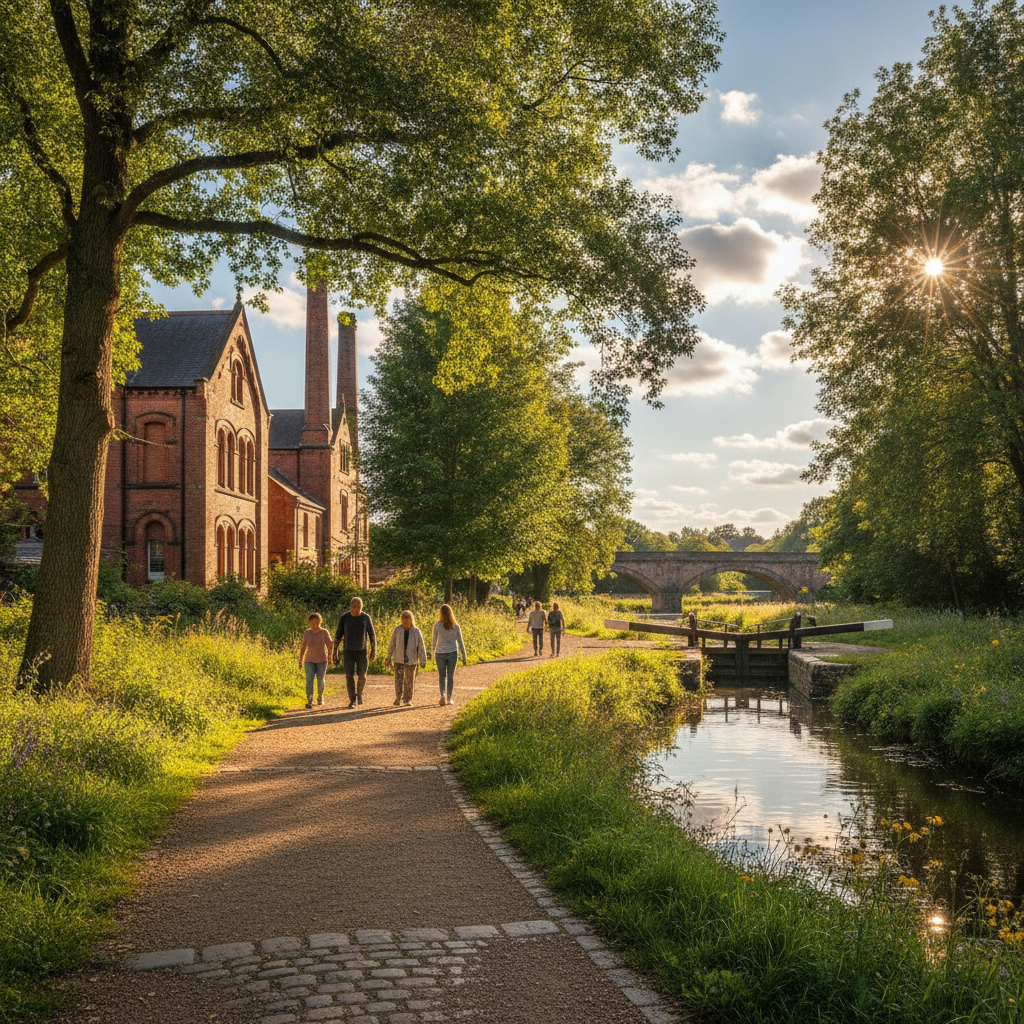
- The Historic Brewhouses: Impressive red-brick brewing blocks, water towers, and copper houses tower over parts of the town, featuring robust industrial brickwork and decorative iron detailing typical of high-Victorian enterprise.
- The Brewhouse Arts Centre: Once a functioning part of the town's malting and brewing infrastructure, this building on Union Street has been repurposed as a creative arts venue, preserving its characterful heritage exterior.
- Former Railway Crossings and Burton Union Structures: Burton once had its own private railway network linking individual breweries to the main line. While the tracks have largely gone, you can still spot broad openings, level-crossing gates, and track alignments built into the modern street layout.
The Town Hall and Market Place
No exploration of Burton's heritage is complete without visiting the historic Market Place. The area has hosted markets since granted a royal charter by King John in the early 13th century. Today, the Victorian Market Hall stands proudly in the square, offering a lively glimpse into ongoing market traditions alongside local traders and independent stalls.
Further along, the Town Hall stands as one of Burton's grandest public buildings. Built in the late 19th century in the Gothic Revival style, it was gifted to the town by Michael Thomas Bass, the prominent brewer and philanthropist whose statue also stands outside. Bass funded numerous civic improvements across Burton, and the Town Hall's intricate stonework, stained-glass windows, and soaring tower remain testaments to the town's industrial wealth during the Victorian era.
Burton Bridge and the River Trent
The River Trent is the lifeblood of Burton, shaping its trade, transport, and leisure for millennia. A pivotal stop along any local heritage walk is Burton Bridge. The site of historic battles, including the famous Battle of Burton Bridge in 1322 during the Despenser War, the river crossing has served travellers for well over a thousand years. The present stone-arched bridge dates from Victorian times, replacing an ancient multi-arched medieval crossing that was once among the longest bridges in the country.
From the bridge, the heritage trail branches naturally into the Washlands—a rich green corridor that runs alongside the river. Here, natural beauty meets municipal heritage, offering peaceful views of the water, weeping willows, and water birds alongside restored features such as the Andresey Footbridge and Ferry Bridge. The Ferry Bridge, erected in 1889 to replace a perilous pedestrian ferry, is a celebrated iron suspension footbridge that continues to connect Burton with Stapenhill.
Dining and Exploring Locally
A day of walking along the heritage trail will naturally work up an appetite. Because the route weaves directly through the town centre, you will find a wide variety of independent cafes, bakeries, tearooms, and restaurants within a brief stroll. Burton's town centre and historic quarters are also home to classic Staffordshire public houses, where you can sample regionally crafted cask ales and enjoy warm local hospitality in traditional tavern surroundings.
Relax at Three Queens Hotel & Lodge
After a full day uncovering Burton's civic and industrial past, enjoy the convenience of staying at Three Queens Hotel. Situated right on Bridge Street, the hotel puts you within easy walking distance of the river, Burton Bridge, and the historic town centre, as well as just one mile from Burton train station and close to the A38 corridor.
With 62 rooms available, the hotel offers options to suit every type of visit. Browse our range of rooms and suites, which include Single, Standard Double, Executive Double, Standard Twin, Executive Twin, Family, Quadruple, Mews Apartment, and a four-poster Suite. Every room is en-suite with a private bathroom, flat-screen TV with Freeview and radio, tea and coffee making facilities, a hair dryer, direct dial phone, and complimentary toiletries.
Guests benefit from free on-site parking, free WiFi throughout, daily housekeeping, and a 24-hour dry cleaning and laundry service. Reception is open daily from 8am to 10pm, with a night porter on duty from 10pm to 8am to ensure support around the clock. When planning your historical getaway, book your stay online with Three Queens Hotel for great rates and an unbeatable location for walking the heritage trail.
Planning a visit? Book your stay at Three Queens Hotel & Lodge.
Book Now